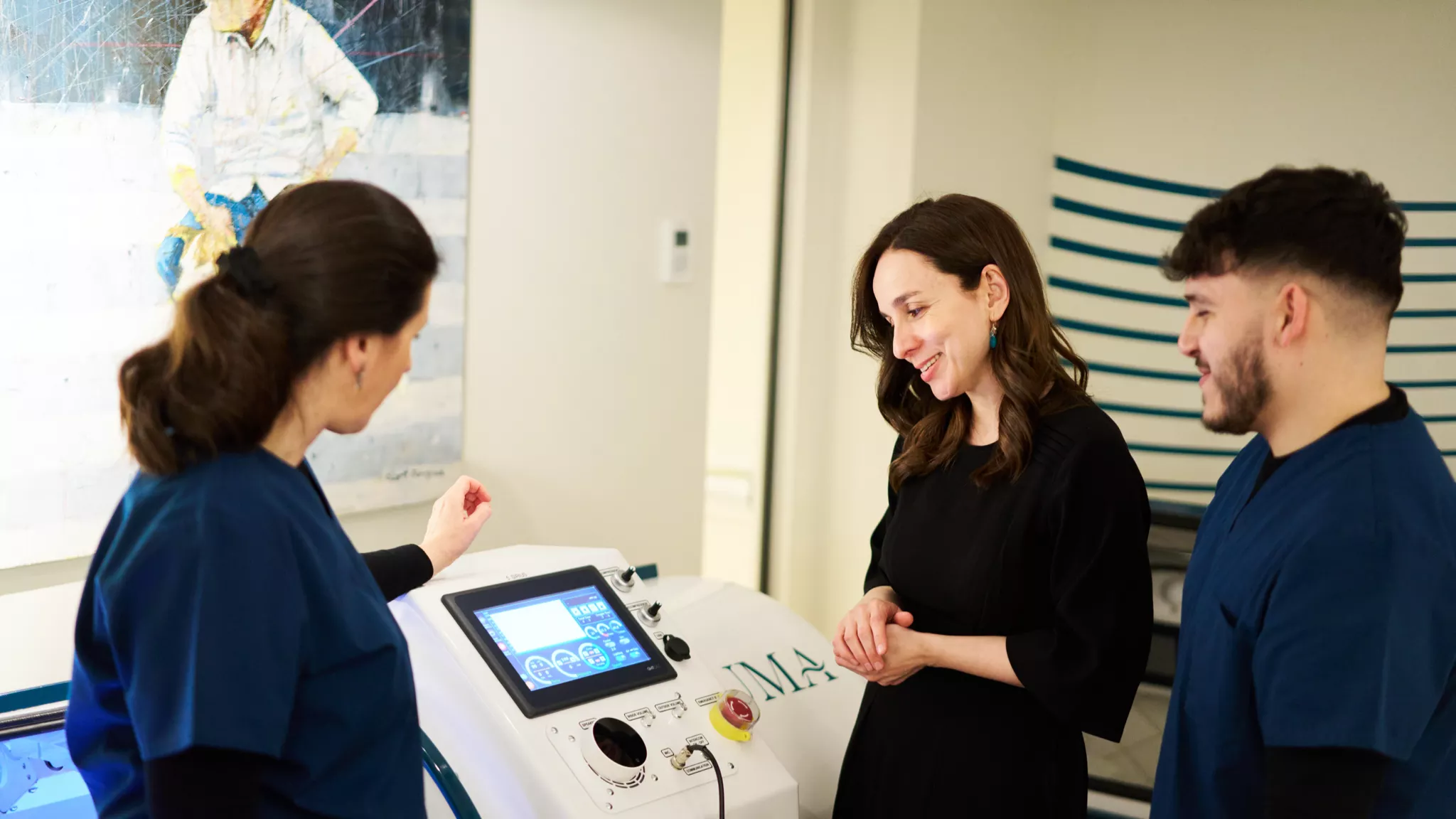
Who uses HBOT?
At NUMA, people explore Hyperbaric Oxygen Therapy (HBOT) for a range of wellbeing, recovery and health-related reasons.
Common Reasons for Enquiry
People enquire about HBOT at NUMA for a variety of reasons, including:
- Avascular Necrosis
- Crohn’s Disease & Ulcerative Colitis
- Filler Complications & Vascular Occlusion
- Hair Transplant Recovery
- Long COVID, ME/CFS & Post-Viral Fatigue
- Post-Surgical Recovery & Wound Healing
- Radiation-Induced Cystitis
- Radiation Necrosis and Late Radiation Tissue Injury
- Sensorineural Hearing Loss
- Sports Performance & Injury Recovery
- Traumatic Brain Injury (TBI)
- Wellbeing & Recovery
Worldwide Applications
The European Committee for Hyperbaric Medicine’s (ECHM) 10th Consensus Conference on Hyperbaric Medicine agreed on revisions to their list of accepted indications for HBOT in April 2016, with the final report published in March 2017.
The 13th edition of the US based Undersea and Hyperbaric Medical Society’s (UHMS) “Hyperbaric Oxygen Therapy Indications” (April 2014) defines the worldwide accepted 14 indications for HBOT
- Air or Gas Embolism
- Carbon Monoxide Poisoning
- Gas Gangrene
- Compartment Syndrome
- Crush Injury
- Other Traumatic Ischaemias
- Decompression Sickness (Bends)
- Arterial Insufficiencies
- Severe Anaemia
- Intracranial Abscess
- Necrotising Soft Tissue Infection
- Osteomyelitis (Refractory)
- Delayed Radiation Injury (Soft Tissue and Bony Necrosis)
- Compromised Grafts and Flaps
- Acute Thermal Burn Injury
- Idiopathic Sudden Sensorineural Hearing Loss
NHS Funded Applications
In the UK, the NHS currently provides funding for hyperbaric oxygen therapy (HBOT) for the following conditions
- Decompression Illness
- Arterial Gas Embolism
In compliance with UK and EU laws, we affirm that Hyperbaric Oxygen is not administered with the intention of curing or preventing any disease. Please be aware that the content on this website, such as medical research papers, references, case studies, articles, texts, graphics or images, is intended for educational and informational purposes only. Research findings are not guaranteed to be consistent across all individuals and may not be applicable to every individual or circumstance.
This website is not meant to be a substitute for professional medical care, and it should not be used for diagnosis or treatment purposes. Please seek advice from a qualified healthcare professional for any health-related issues.