NHBOT

Ask NHBOT

NUMA’s AI assistant for questions about hyperbaric oxygen therapy.

Explore treatment evidence, what sessions involve and questions to discuss with our clinical team.

Questions you could ask

  • “What happens during an HBOT session?”
  • “What benefits can HBOT provide?”
  • “What conditions is HBOT used for?”
  • “Is HBOT safe?”
Open NHBOT

Opens nhbot.ai in a new tab

Hyperbaric Oxygen Therapy for Hair Transplant Recovery

Hyperbaric oxygen therapy may support early recovery after hair transplantation by increasing tissue oxygen availability and supporting wound healing. At NUMA, treatment is individually assessed and medically prescribed.

A surgeon wearing loupes, a surgical cap, and a mask uses a handheld device to perform a hair transplant procedure on a bald male patient reclining in a treatment chair, in a modern clinical setting.

What is Hair Transplant?

A hair transplant is a surgical procedure that moves healthy hair follicles, usually from the back or sides of the scalp, to areas where hair is thinning or has been lost. The transplanted follicles continue to grow hair naturally over time.

How HBOT may support Hair Transplant Recovery?

What does evidence show?

Evidence is still limited, but a small RCT of 34 FUE hair transplant patients found 7 days of HBOT at 2.0 ATA reduced itching, folliculitis, and early shedding (27.6% vs. 69.1% in controls), with higher patient satisfaction. At 9 months, graft survival was slightly higher with HBOT (96.9% vs. 93.8%), though not statistically significant. HBOT may support early postoperative recovery, but clear evidence of long-term graft survival benefit is still lacking.


Fan et al., 2021

Tissue Oxygenation & Graft Healing

HBOT increases dissolved oxygen, which may support healing tissues while circulation develops. Wider surgical evidence supports its use in flap and graft healing, although direct evidence after hair transplantation remains limited.

Carter et al. (2026)

Inflammation & Tissue Repair

HBOT may help modulate inflammation while supporting biological processes involved in tissue repair, including angiogenesis, fibroblast activity and collagen production.

Ortega et al. 2021

Postoperative Recovery & Comfort

A five-patient FUE case report described rapid resolution of postoperative discomfort, crust resolution within 3–5 days and high patient satisfaction following HBOT. These preliminary findings require confirmation in larger controlled studies.

Giardiello et al. (2025)

Direct evidence remains limited. HBOT should be considered an adjunct to, not a replacement for, standard surgical and medical care.

Hyperbaric oxygen therapy after hair transplantation

A clinical review of the evidence for HBOT following hair transplantation, including its potential role in early postoperative recovery, tissue oxygenation, inflammation, graft healing and patient-reported outcomes, alongside the current limitations of the evidence.

Dr Nur Ozyilmaz

HBOT Treatment Pathway

Every plan begins with a medical questionnaire reviewed by Dr Nur, followed by a consultation where she prescribes a customised programme — determining the optimal duration, frequency, and total number of sessions.

Pre-procedure preparation (optional)

1 session

90 minutes, the day before surgery.

Post-transplant recovery

5–10 sessions

90 minutes, daily, ideally starting within 24 hours of transplant.

Complications (ischaemia or tissue compromise)

20+ sessions

May be required, guided by clinical assessment.

Every treatment plan is personalised. The number, frequency and timing of HBOT sessions vary according to individual clinical circumstances and may change as treatment progresses.

Dr Nur speaking with a patient during a medical consultation at NUMA

Choosing Safe, Consultant-Led HBOT for hair transplant recovery

HBOT is a medical treatment that requires specialist assessment and prescription to ensure it is safe, appropriate and tailored to your individual needs. Treatment is provided alongside, not in place of, your hair transplant surgeon's postoperative care. Your consultation with our specialist medical doctor includes:

  • Review of your medical history, transplant procedure and postoperative recovery
  • Assessment of HBOT suitability and an individualised treatment prescription
  • Discussion of the available evidence, potential benefits and limitations
  • Ongoing medical supervision and review throughout treatment
Laurel
Top-rated care
4.9
181 Google reviews
Laurel
Consultant-led medical service
Fully regulated service
25,000+ treatment hours delivered

Patient experiences

Hear from our patients about their experience with our clinic

Review 1 of 2
Surgical Recovery

I was recommended to undergo a course of oxygen therapy by my doctor post some recent surgery. Being slightly claustrophobic I must admit to some anxiety when the process began. But to be honest I shouldn't have worried. Having such a very capable, kind and professional team to support the process meant I happily went on to have 10 full sessions. I can't honestly tell you whether the treatment worked or not but one thing I can say is that I saw a remarkable turnaround from looking like my face had done a full round with Mike Tyson to almost a full recovery in less than 4 weeks. So a big thank you to the Team of amazing people who helped me through.

Individual experiences vary and testimonials should not be taken as evidence of treatment outcomes.

Related reading on Hair Transplant Recovery?

Featured In

Financial Times

Financial Times

The Times

The Times

Evening Standard

Evening Standard

Learn more about NUMA's clinical approach to HBOT

NUMA is a consultant-led specialist HBOT clinic focused exclusively on medical hyperbaric oxygen therapy. Our service combines medical oversight, personalised treatment planning and purpose-built facilities designed to support safe and high-standard care.

25+ Years
Medical Experience
Specialist
HBOT Clinic
Exclusively
HBOT
CQC Registered
UHMS Member
8 Chambers
Up to 2.0 ATA
Consultant-Led
Care
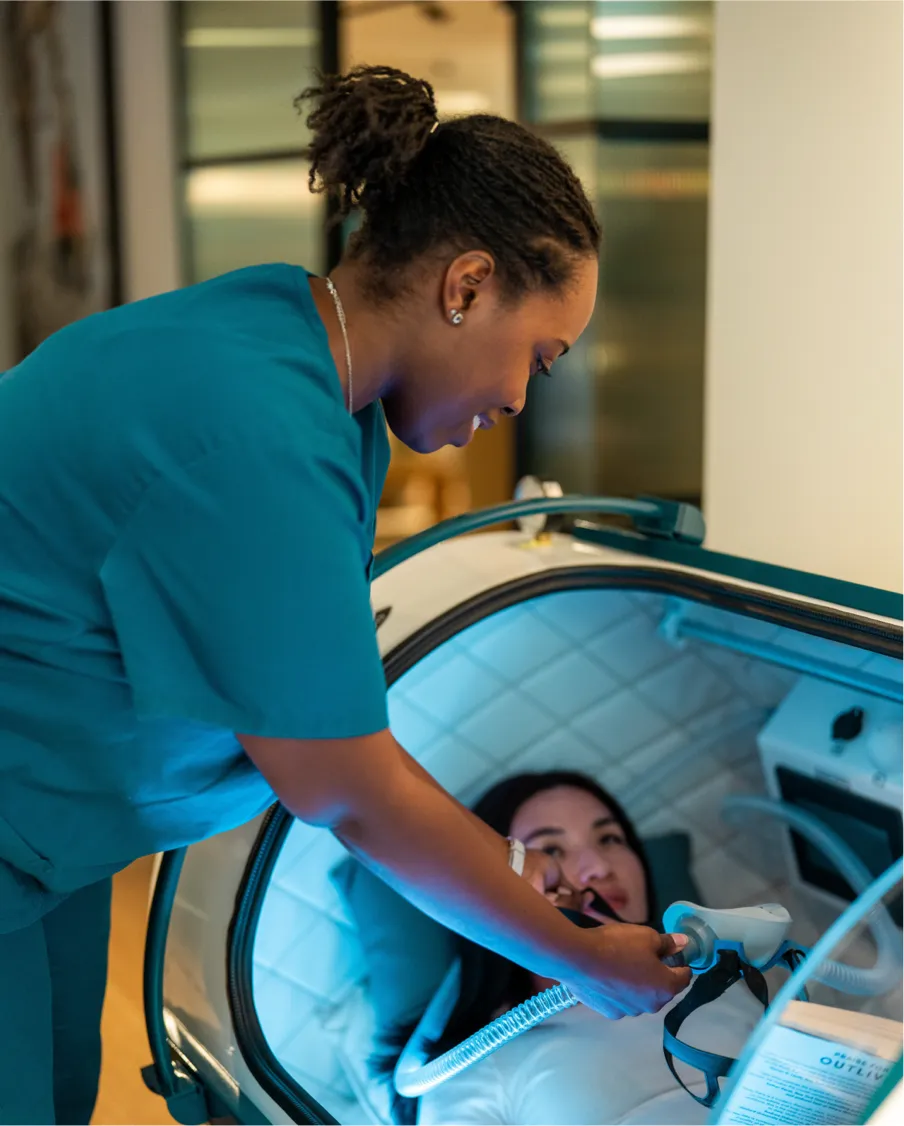
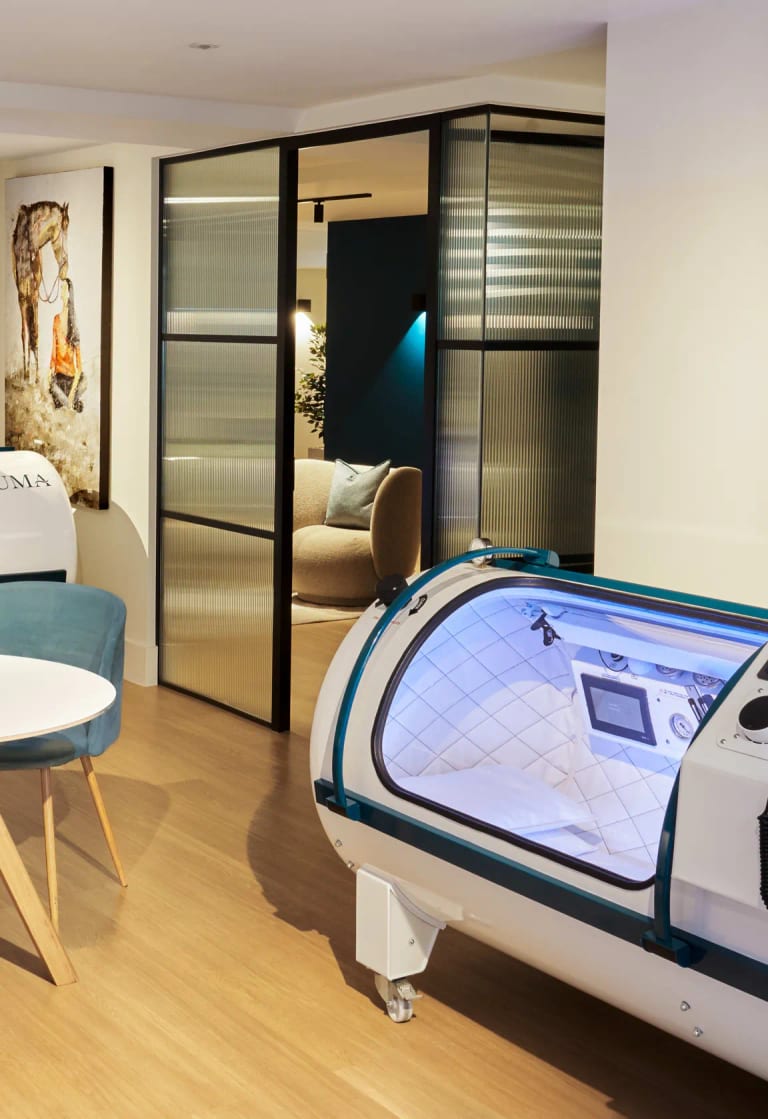
A patient undergoing a hyperbaric oxygen therapy sessionA hyperbaric oxygen therapy chamber room